


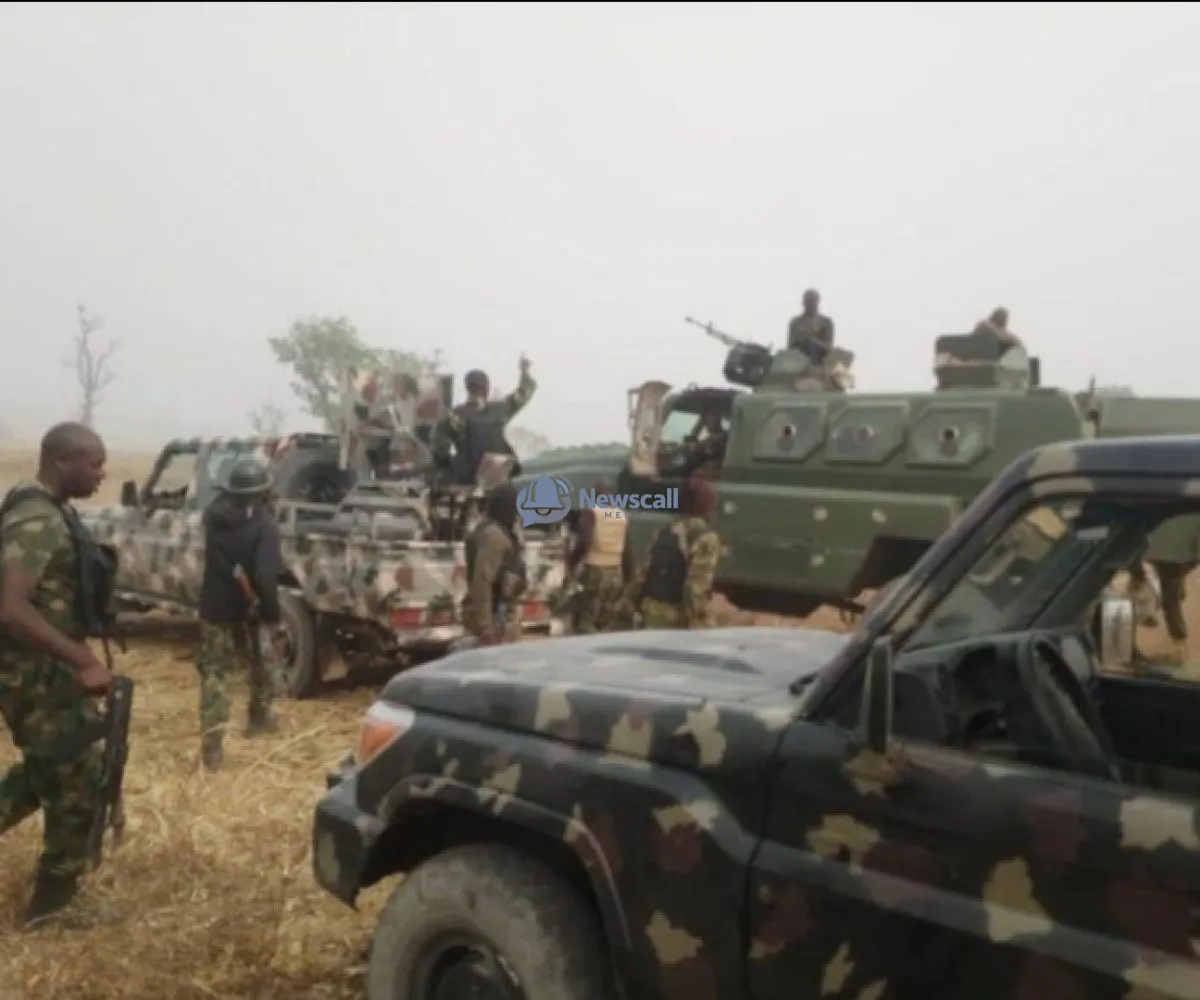
Troops of Operation Hadin Kai during counter-insurgency operations in Borno State.
ISWAP Attack Kills Nigerian Soldiers in Borno as Militants Storm Military Base
By Emmanuel Ebubechukwu
At least 10 Nigerian soldiers have reportedly been killed after suspected fighters of the Islamic State West Africa Province (ISWAP) launched a deadly attack on a military position in Kukawa Local Government Area of Borno State.
The attack, which further highlights the persistent security challenges confronting communities in Nigeria’s troubled North-East, reportedly occurred as the militants targeted a military base in the area.
According to reports, the attackers engaged Nigerian troops in a fierce confrontation, resulting in casualties on the side of the military. A report by the Associated Press, citing an official familiar with the incident, put the number of soldiers killed at no fewer than 10.
The attack also reportedly resulted in significant casualties among the insurgents, with Nigerian forces said to have killed more than 25 ISWAP fighters during the confrontation.
The latest incident comes amid continuing efforts by the Nigerian military to dismantle terrorist networks operating across Borno and other parts of the North-East.
For residents of communities repeatedly exposed to attacks, however, the incident is another painful reminder that the insurgency remains a serious threat despite years of military operations against Boko Haram and ISWAP.
Kukawa is located in Borno State, one of the areas that has remained at the centre of Nigeria's counter-insurgency campaign since the Boko Haram insurgency escalated more than a decade ago.
Although Nigerian troops have recorded significant successes against terrorist groups in recent years, insurgents have continued to employ ambushes, attacks on military positions, improvised explosive devices and other tactics to inflict casualties and disrupt military operations.
The latest assault therefore raises fresh questions about the security of military bases and the ability of terrorist groups to launch coordinated attacks despite sustained pressure from Nigerian security forces.
The Nigerian military has not, at the time of publication, provided a comprehensive public account of all the casualties from the incident. Details surrounding the circumstances of the attack, including how the insurgents breached the military position and the extent of equipment or infrastructure damaged, remain subject to further official clarification.
The reported loss of soldiers is likely to renew concerns among security analysts and residents about the continuing cost of the insurgency to Nigeria's armed forces.
Beyond the military casualties, attacks of this nature often create fear among civilians living around affected communities. Residents may be forced to flee their homes, while commercial activities and movement can be disrupted whenever armed groups launch attacks or military operations intensify.
The Nigerian government and military have repeatedly maintained that defeating terrorism remains a major priority, with security agencies continuing operations against Boko Haram and ISWAP elements in the North-East.
The latest attack, however, demonstrates that the security challenge is far from over.
As the military continues its counter-insurgency campaign, attention will now turn to the circumstances surrounding the Kukawa attack, the identities of the fallen soldiers and the government's response to the latest loss of military personnel.
For families of the soldiers reportedly killed, the incident represents more than another security statistic. It is the loss of loved ones who were serving in one of Nigeria's most dangerous theatres of military operations.
The development is expected to keep the security situation in Borno firmly in the national spotlight as authorities work to prevent further attacks and protect both military personnel and civilians in the region.

EMMANUEL EBUBECHUKWU
A young boy,passionate about writing. I just write to feel happy. So help me God.


