Typhoon Champi Leaves Death and Disruption in Its Wake as Extreme Weather Tests Preparedness
Taiwan faced widespread transport disruption, evacuations and dangerous coastal conditions as Typhoon Champi swept past the island, leaving at least one person dead and many others injured.
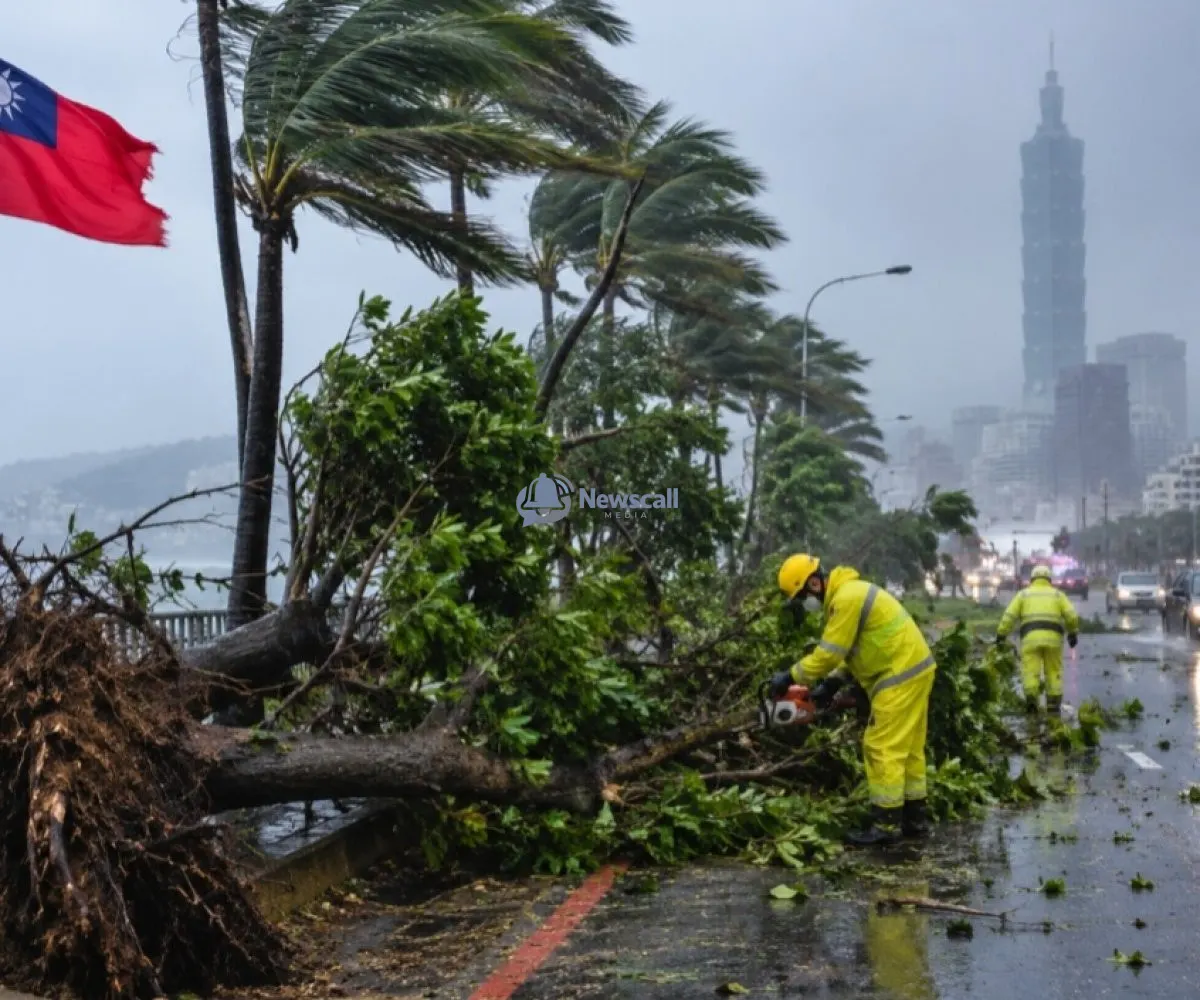
TAIPEI, Taiwan — Typhoon Champi brought powerful winds, torrential rain and hazardous waves to Taiwan on Friday, October 23, disrupting travel and forcing authorities to suspend normal activities across much of the island. Although the storm’s centre was expected to remain offshore, its extensive wind field exposed communities far from its core to dangerous conditions.
The storm’s impact demonstrated how a typhoon can cause substantial damage without making direct landfall. Strong winds, falling objects, coastal waves and heavy rainfall created multiple hazards for residents, emergency workers and travellers.
Taiwan’s Central Emergency Operations Center reported one death and dozens of injuries in figures released on October 23. The fatality involved a man swept away by storm-driven waves in Liuqiu Township, Pingtung County. The Associated Press subsequently reported that more than 170 people had been injured as the storm affected Taiwan, while disruptions also extended to neighbouring parts of East Asia. [Sources: Focus Taiwan/Central Emergency Operations Center; Associated Press.]
Flights cancelled as authorities restrict movement
Authorities took extensive precautionary measures as Champi approached. Schools and offices closed in many areas, while transport operators cancelled flights and travellers faced widespread disruption.
Reuters reported on October 23 that all 262 domestic flights scheduled in Taiwan were cancelled, alongside hundreds of international services. Financial markets also suspended operations for the day, while restrictions were imposed in vulnerable areas.
The measures reflected the threat posed by the storm’s size and intensity. Even when a typhoon’s centre remains offshore, its outer bands can produce dangerous gusts and heavy rain over a broad area. Mountainous terrain can increase the risk of landslides, while intense rainfall may overwhelm drainage systems and cause flash flooding.
Authorities also urged the public to avoid beaches and other exposed coastal locations. Storm-driven waves can sweep people from rocks, breakwaters and shorelines with little warning, even when conditions on land appear manageable.
A powerful storm weakens but remains dangerous
Taiwan’s Central Weather Administration tracked Champi as it moved north-northeastwards, away from its earlier path. On October 23, reported maximum sustained winds were approximately 155 kilometres per hour, with gusts reaching about 191 kilometres per hour.
The storm had previously reached much greater intensity over the Pacific before weakening. Forecasts indicated that its centre would pass near northeastern Taiwan and continue towards Japan.
However, weakening does not immediately eliminate danger. Large storms may retain broad wind fields even as their central wind speeds decline. Heavy rain, coastal surges and falling trees can continue to threaten lives and infrastructure after the most intense phase has passed.
The storm also affected Japan’s southwestern islands, where reports included injuries, flight disruption and electricity outages. In the Philippines, authorities introduced maritime and aviation restrictions and took precautionary measures in exposed communities.
Preparedness can reduce losses, but not remove the danger
Taiwan regularly experiences tropical cyclones and has established systems for weather monitoring, public warnings, evacuation and emergency coordination. These systems can help reduce casualties by giving residents and institutions time to prepare.
Nevertheless, the consequences of a storm depend on more than its maximum wind speed. The number of people exposed, the strength of buildings and infrastructure, the condition of drainage systems, the availability of transport and the speed of emergency response all influence the final toll.
Climate change also complicates the long-term picture. A warmer atmosphere can hold more moisture, increasing the potential for intense rainfall. Warmer ocean conditions can contribute to the intensity of some tropical cyclones, although the influence of climate change on any individual storm requires specific scientific analysis.
It would therefore be inaccurate to attribute Champi directly to climate change without a dedicated attribution study. The broader lesson is that disaster preparedness must account for multiple hazards, including extreme rainfall, coastal waves and infrastructure failures, rather than focusing only on whether a storm makes landfall.
The recovery matters as much as the warning
As the immediate threat moved away, attention shifted towards assessing damage, restoring transport and electricity, and checking on vulnerable residents. Official casualty and damage figures may change as authorities complete their assessments.
For communities affected by the storm, recovery involves more than clearing fallen trees. Families may face damaged property, disrupted income, cancelled travel and uncertainty about when normal services will resume.
Typhoon Champi offers a reminder that effective early warnings must be matched by public cooperation, reliable infrastructure and timely emergency assistance. The storm’s passage may have spared Taiwan a direct hit from its centre, but its consequences show that indirect impacts can still be deadly.

OKORO WILSON EGWU
“Independent journalist delivering sharp, reporting on global conflicts, humanitarian crises, and international diplomacy. Known for transforming complex world events into...