The Air We Breathe Is Becoming a Global Health Threat: More Than Half the World's Population Exposed to Dangerous Ozone Pollution
New analysis raises fresh concerns about the health consequences of air pollution as extreme heat and wildfires worsen air quality across continents.
A global health threat is developing largely out of sight. It cannot always be seen as thick smoke hanging over a city or smelled as fumes from a busy highway. Yet ground-level ozone, an air pollutant intensified by sunlight and heat, may be affecting the health of billions of people.
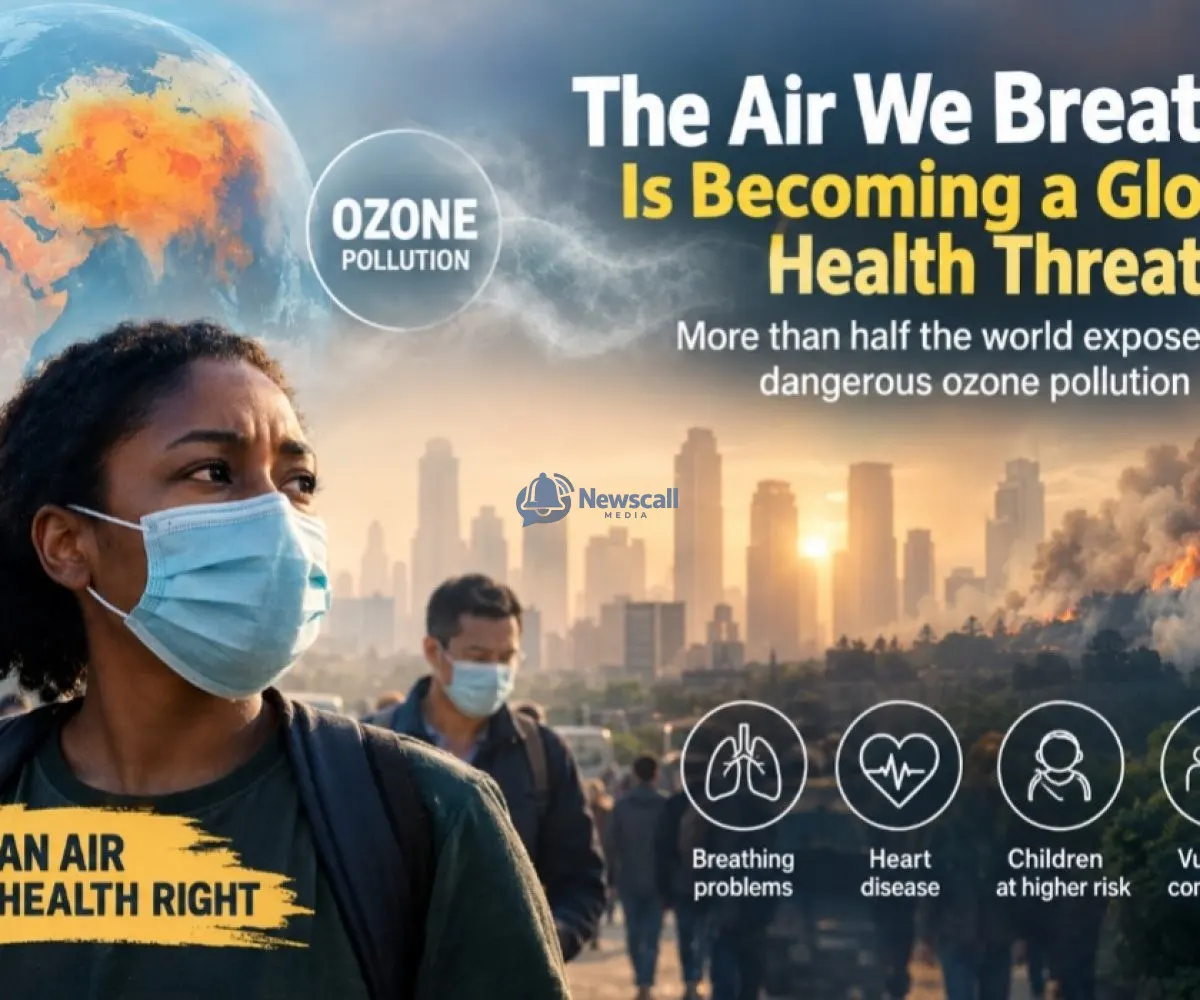
A report published on 26 October 2026 found that more than half the world's population was exposed to very high or extremely high levels of ground-level ozone pollution between January and September this year. The findings, reported by The Washington Post, highlight the growing intersection between air pollution, extreme temperatures and public health.
The warning comes as scientists continue to examine how a warming climate can make existing pollution problems more difficult to control.
What is ground-level ozone?
Ozone is a gas that has very different effects depending on where it occurs in the atmosphere.
High in the stratosphere, it helps protect life on Earth by absorbing harmful ultraviolet radiation from the Sun. At ground level, however, ozone is a harmful air pollutant.
It forms when nitrogen oxides and volatile organic compounds released by vehicles, power stations, industrial facilities and other sources react in sunlight. High temperatures can accelerate the chemical reactions that produce it.
Unlike smoke from a fire, ground-level ozone is not necessarily visible. This makes it possible for people to experience unhealthy air without recognising the danger.
The pollutant can irritate the respiratory system, aggravate asthma, reduce lung function and contribute to inflammation. Children, older people, outdoor workers and people with existing respiratory conditions can be particularly vulnerable.
How heat and wildfires make the problem worse
The relationship between climate change and air pollution is complex, but the connection is increasingly important.
During heatwaves, strong sunlight and high temperatures can favour the chemical reactions that produce ozone. Some weather conditions also allow pollution to accumulate rather than disperse.
Wildfires add another dimension. Their emissions contain gases and particles that can affect air quality directly and contribute to the formation of additional pollutants.
Smoke can travel long distances, exposing people far from the original fire. Pollution therefore does not always respect national borders or remain confined to the communities where it originates.
The result is a challenge for environmental authorities: reducing emissions remains essential, but rising temperatures can undermine some of the benefits of pollution-control measures.
The consequences for human health
Air pollution is not merely an environmental inconvenience. It is a public-health concern with consequences for healthcare systems, workplace productivity and quality of life.
When ozone levels rise, people with asthma may experience worsening symptoms, while otherwise healthy individuals can also develop coughing, throat irritation or breathing difficulties. Repeated exposure can contribute to longer-term respiratory harm.
The effects are not distributed equally. People who work outdoors, live close to major roads or industrial areas, or cannot afford effective protection may face greater exposure.
Children are especially important in this discussion because their lungs are still developing and they often spend considerable time engaged in outdoor activities.
The latest findings do not mean that every exposed person will become ill. Exposure levels, duration, individual health and local conditions all influence risk. Nevertheless, widespread exposure warrants serious attention from public-health agencies.
Why this matters for Africa
African cities face a combination of challenges that can make air-quality management difficult. Rapid urbanisation, growing vehicle fleets, industrial emissions, open burning and limited monitoring infrastructure can complicate efforts to identify pollution hotspots and protect residents.
Heat can add further pressure, especially where people work outdoors or live in buildings that offer little protection from high temperatures.
Nigeria and other African countries can benefit from stronger air-quality monitoring, transparent public reporting and policies that reduce emissions from transport, industry and waste burning.
Practical interventions include improving public transport, enforcing vehicle-emission standards, preventing uncontrolled waste burning and expanding reliable monitoring networks. Public warnings can also help vulnerable people adjust outdoor activities when pollution levels become dangerous.
Importantly, ozone pollution and particulate pollution are not identical. Measures to address one pollutant may not automatically solve the other, which is why monitoring and policy must be based on scientific evidence.
What governments and individuals can do
Governments need to treat clean air as part of public-health infrastructure. Monitoring stations, enforceable emissions standards, reliable data and coordinated urban planning are important tools.
Health authorities can use pollution forecasts to advise residents when to reduce strenuous outdoor activity. Schools, hospitals and workplaces can also develop procedures for days when air quality deteriorates.
Individuals can follow official air-quality alerts, avoid intense outdoor exercise during high-ozone periods and seek medical advice if they experience serious or persistent breathing difficulties.
However, responsibility should not be placed on individuals alone. People cannot independently control the emissions of power plants, industries or entire transport systems. Effective protection requires public policy and cooperation across sectors.
A warning that demands action
The latest analysis provides another reminder that climate change affects more than temperatures and weather records. It can also influence the quality of the air people breathe.
The challenge is to reduce pollution while adapting to a hotter world. Cleaner transport, better industrial controls, improved monitoring and stronger public-health communication can all contribute to that effort.
The central lesson is straightforward: clean air cannot be taken for granted. When pollution becomes widespread, the consequences extend from individual lungs to national healthcare systems and the wider economy.
The danger may be invisible, but the need for action is not.

OKORO WILSON EGWU
“Independent journalist delivering sharp, reporting on global conflicts, humanitarian crises, and international diplomacy. Known for transforming complex world events into...