


Google Is Putting AI Chips in Space — What Would an AI Data Center in Orbit Actually Look Like?
Google has just taken one of the strangest steps yet in the race to build more powerful artificial intelligence: it has put its AI chips in orbit.
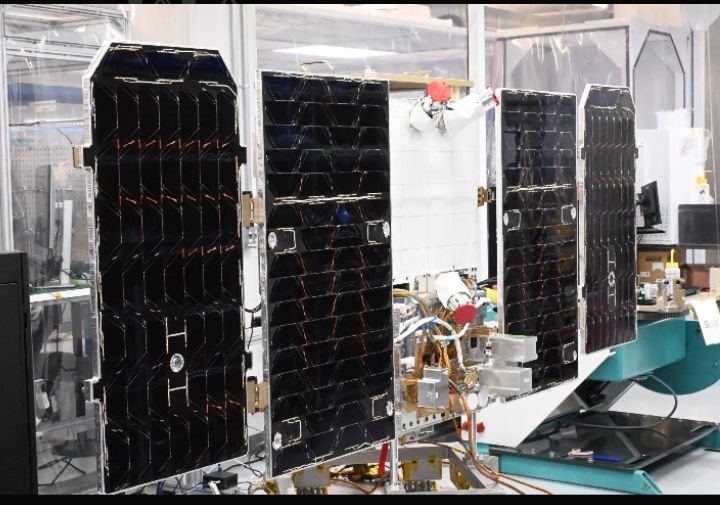
On October 1, Google’s Project Suncatcher prototype launched aboard SpaceX’s Transporter-18 mission, sending four of the company’s Trillium Tensor Processing Units, or TPUs, into space. The refrigerator-sized spacecraft was built with Planet and is designed to answer a deceptively simple question: can the hardware powering modern AI actually survive and work in orbit?
That is a much smaller achievement than building a data center in space, but it could be the first physical step toward something far bigger.
Google’s long-term idea is to build networks of satellites packed with AI processors, solar panels, cooling systems and high-speed optical links, creating an orbital computing infrastructure powered primarily by sunlight.
If that sounds like science fiction, it is worth remembering what is driving the idea. AI data centers on Earth are becoming enormous consumers of electricity, land, cooling capacity and other infrastructure. Google is essentially asking whether some of that computing could eventually be moved somewhere with an almost unlimited energy source overhead: space.
The most obvious attraction is sunlight.
On Earth, solar panels lose access to sunlight at night and are affected by weather and the atmosphere. In the right low-Earth orbit, Google says solar panels could receive sunlight almost continuously and generate up to eight times more power than comparable panels on Earth.
That does not mean an orbital data center would magically have unlimited electricity. It would still need enormous solar arrays, power-management systems, batteries or other storage mechanisms, and hardware capable of surviving a hostile environment. But the basic energy equation is attractive enough for Google to investigate.
And this is where the idea becomes much more interesting.
A conventional data center is essentially a giant industrial building filled with computing hardware. It needs electricity coming in, networking, cooling systems, physical security and a huge amount of supporting infrastructure.
An orbital data center would look completely different.
Instead of one enormous building, imagine a constellation of satellites moving around Earth. Each satellite could carry dozens of AI chips, solar panels to generate electricity and large radiator systems to dump heat into space.
Those satellites would then have to communicate with one another at extremely high speeds.
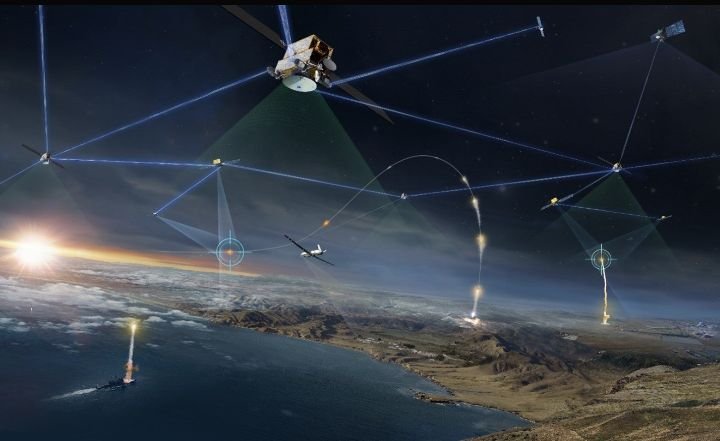
Google is exploring free-space optical communication, essentially using lasers to connect satellites. For AI workloads, that connection matters enormously because processors cannot simply operate as isolated islands. If thousands of chips are working together on a large model, moving information between them quickly becomes part of the computing problem itself.
Google says future versions of its concept could place satellites in clusters, with each spacecraft knowing its position relative to neighboring satellites and maintaining extremely precise laser connections.
But one of the biggest surprises is that space does not automatically make cooling easier.
On Earth, data centers can move heat through air, water and elaborate liquid-cooling systems. Space is a vacuum. There is no surrounding air to carry heat away.
That creates a bizarre engineering problem: a satellite can be surrounded by extremely cold space while the chips inside it are still dangerously hot.
The solution is radiation.
Heat has to be conducted away from the processors and eventually emitted from large radiator surfaces. Google is testing combinations of heat pipes and radiators for exactly this purpose.
Its first satellite will not run its AI processors continuously. According to Ars Technica, the experimental system is expected to operate in roughly 15-minute bursts before the cooling system needs time to catch up.
That detail is important because it shows how far the technology still has to go.
Putting four TPUs in orbit is one thing. Building something equivalent to a modern hyperscale AI data center is another.
Google's own research envisions future satellites carrying many more processors, but scaling the system would require solving several problems simultaneously: launch costs, radiation, cooling, networking, maintenance, hardware reliability and the rapidly changing nature of AI chips.
Radiation is particularly important.
Earth's atmosphere and magnetic field provide substantial protection from the radiation environment of space. Electronic components in orbit are exposed to energetic particles that can cause errors or damage.
Google has already subjected its Trillium TPUs to radiation testing on Earth. The company says its initial tests showed the chips could withstand a radiation dose greater than what they would receive during a five-year space mission.
The real test, however, is now happening in orbit.
That is why Project Suncatcher is better understood as an infrastructure experiment than a space-based replacement for Google’s existing data centers.
Nobody is about to start asking Gemini questions through a satellite because the Earth-based Google data centers have been switched off.
The first mission is about discovering what breaks.
If the hardware survives, the next question becomes whether multiple satellites can work together. Google plans further testing in 2027 involving two interconnected satellites, moving the experiment closer to the networking challenge that a real orbital computing system would face.
Eventually, the architecture could become much larger.
Instead of one satellite, there could be hundreds or thousands. Instead of four TPUs, each spacecraft could carry dozens or more. Solar arrays could provide the electricity while radiator systems handle heat and optical links connect the computing nodes.
Google has estimated that an eventual 1-gigawatt orbital data center could require around 10,000 satellites.
That number alone explains why this is not an ordinary data-center expansion project.
Launching thousands of satellites is enormously expensive, and getting them into orbit requires rockets, manufacturing capacity and an orbital logistics system capable of operating at a completely different scale.
Google's research therefore depends partly on another technology race: cheaper and more frequent space launches.
In a recent analysis accompanying its Suncatcher research, Google explored what launch economics could look like if the cost of putting hardware into orbit continues falling. The company has pointed to a possible launch cost around $200 per kilogram in the mid-2030s under an aggressive cost-reduction scenario.
That is a huge assumption, and Google itself has emphasized that its analysis is not an economic feasibility study.
Still, it reveals something important.
The future of AI may not be limited only by better algorithms and faster chips. It may increasingly be limited by infrastructure.
Where do you get the electricity?
Where do you put the data centers?
How do you cool millions of processors?
How do you connect them?
And what happens when AI demand grows faster than the electrical grid can expand?
Those questions are helping turn data-center infrastructure into one of the biggest technology stories of the decade.
Space offers a radically different answer to some of them, but introduces an entirely new collection of problems.
There is also a practical question that could determine whether orbital computing ever becomes more than an impressive engineering experiment: what workloads actually belong in space?
Real-time applications that require extremely low latency would still make more sense close to users on Earth. Nobody wants a financial transaction, video game or instant AI response routed through a satellite constellation unnecessarily.
But enormous AI training jobs, scientific simulations, batch processing and other workloads that can tolerate some delay could be different.
Those workloads consume tremendous amounts of energy and computing power. If an orbital system eventually becomes economically competitive, they could be among the first candidates for migration away from Earth.
That could produce a strange future in which the world's computing infrastructure is split between two environments.
Earth would handle latency-sensitive computing close to people and businesses.
Orbit could handle some of the planet's largest and most energy-intensive computing workloads.
That future is nowhere near guaranteed.
Satellites eventually need maintenance or replacement. AI chips become obsolete much faster than spacecraft traditionally do. Space debris creates another serious risk. Launches remain expensive. Radiation is difficult. Cooling is difficult. High-bandwidth communication between moving satellites is difficult.
And every kilogram sent into orbit has a price.
There is also an environmental and orbital-management question that becomes harder to ignore as the number of satellites increases. A future filled with enormous computing constellations would add even more hardware to an already crowded orbital environment.
For now, Google is taking the only sensible route available: testing one difficult problem at a time.
Can the chips survive launch?
Can they survive radiation?
Can they operate in vacuum?
Can the cooling system keep them alive?
Can multiple satellites communicate fast enough to behave like one computing system?
And eventually, can the whole thing compete economically with a data center built on Earth?
The first four TPUs now in orbit will not answer all of those questions.
But they can provide something simulations cannot: real-world data.
That may be the most important part of Project Suncatcher.
Google is not building a space data center yet. It is testing whether the fundamental pieces could eventually make one possible.
If the experiments work, today's refrigerator-sized satellite could look surprisingly small in retrospect.
It could become an early prototype of a much larger idea: an AI infrastructure layer surrounding Earth, powered by sunlight, connected by lasers and built far above the data centers that currently consume enormous amounts of land, electricity and water.
For now, though, the biggest AI data centers are still firmly on Earth.
Google has simply started asking whether that will always be the case.

Victor Oluebubechukwu Akuma.
Creative writer


