Brazil Heads for Political Showdown as Bolsonaro’s Son Beats Lula in First-Round Vote.
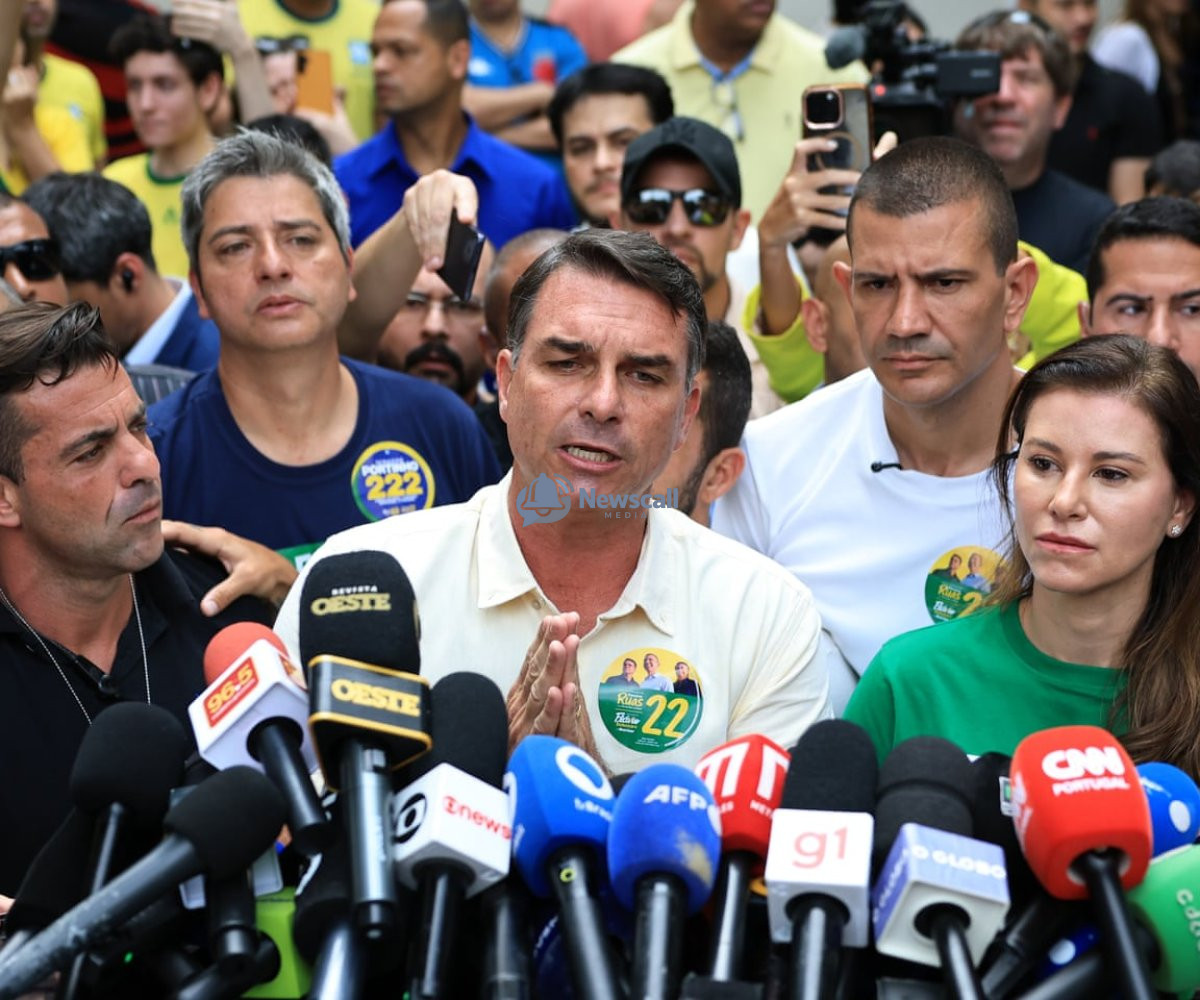
Brazil Heads for Political Showdown as Bolsonaro’s Son Beats Lula in First-Round Vote.
Flávio Bolsonaro and President Luiz Inácio Lula da Silva advance to October 25 runoff after neither secures a first-round majority
Brazil has entered a dramatic new phase in its presidential election after right-wing Senator Flávio Bolsonaro emerged ahead of incumbent President Luiz Inácio Lula da Silva in the first round, setting up a closely watched runoff that could reshape the political direction of Latin America's largest country.
With virtually all ballots counted, Flávio Bolsonaro secured 47.03 per cent of valid votes, while Lula received 45.16 per cent, according to Brazil's Superior Electoral Court. Neither candidate crossed the 50 per cent threshold required to win outright, sending the contest into a second round scheduled for October 25.
The result represents a significant moment for Brazil's conservative movement and places Flávio Bolsonaro, the son of former President Jair Bolsonaro, in a potentially strong position as the campaign enters its decisive stage.
Flávio's first-round performance was stronger than some pre-election expectations. His campaign successfully mobilised voters who have remained dissatisfied with the current administration, particularly over concerns surrounding the economy, public security and the cost of living.
Lula, meanwhile, remains a formidable political force. The veteran politician has decades of experience in Brazilian politics and is seeking another term after returning to the presidency in 2023.
A Contest Shaped By Deep Divisions
The election has exposed the continuing political divide within Brazilian society.
The Bolsonaro political movement has retained substantial support among conservative voters despite the legal and political controversies surrounding former President Jair Bolsonaro. Flávio has sought to build on that political base while presenting himself as a continuation of the conservative agenda associated with his family.
Lula's Workers' Party, on the other hand, continues to appeal strongly to left-wing voters, working-class communities and sections of Brazil's northeastern region.
According to the official results, Flávio received more than 56 million votes, while Lula secured more than 53 million, leaving only a relatively narrow gap between the two candidates.
That narrow difference means the second round could be determined by voters who supported candidates eliminated in the first round.
Both campaigns will now be under pressure to broaden their coalitions and persuade millions of voters who did not vote for either candidate.
Why The Runoff Matters
The October 25 runoff will be about more than simply choosing Brazil's next president.
It will also represent a referendum of sorts on the country's political direction.
A Flávio Bolsonaro victory would strengthen the conservative political movement associated with his father and could signal a further shift to the right in one of the world's most influential democracies.
A Lula victory, meanwhile, would allow the left-wing president to continue his administration's agenda and consolidate his political comeback.
Economic issues are expected to dominate the next stage of the campaign. Brazilian voters continue to pay close attention to inflation, employment, household purchasing power, public debt and the overall cost of living.
Security is another major concern, while the candidates are also expected to intensify their debate over social welfare, government spending, democratic institutions and Brazil's position on the international stage.
The Battle Ahead
The first-round result has already changed the political calculations of the competing campaigns.
Rather than campaigning primarily to defeat numerous opponents, Bolsonaro and Lula must now focus almost entirely on winning over voters who supported other candidates.
That means the coming weeks are likely to feature intense negotiations, endorsements and attempts to appeal to undecided voters.
Flávio will seek to convince voters that his political movement represents change and a stronger conservative alternative. Lula, meanwhile, is expected to argue that his administration offers stability and experience and warn voters about what he sees as the risks of a return to Bolsonaro-style politics.
The outcome will be watched closely across Latin America and beyond.
Brazil is the region's largest economy and one of the world's most populous democracies. Its presidential election therefore carries implications not only for domestic policy but also for regional diplomacy, trade, environmental policy and relations with major global powers.
For now, however, the race remains wide open.The first round has produced a clear message: Brazil is divided, and the presidency will be decided in the runoff.

Anozie Chiemerie Emmanuel
Writer